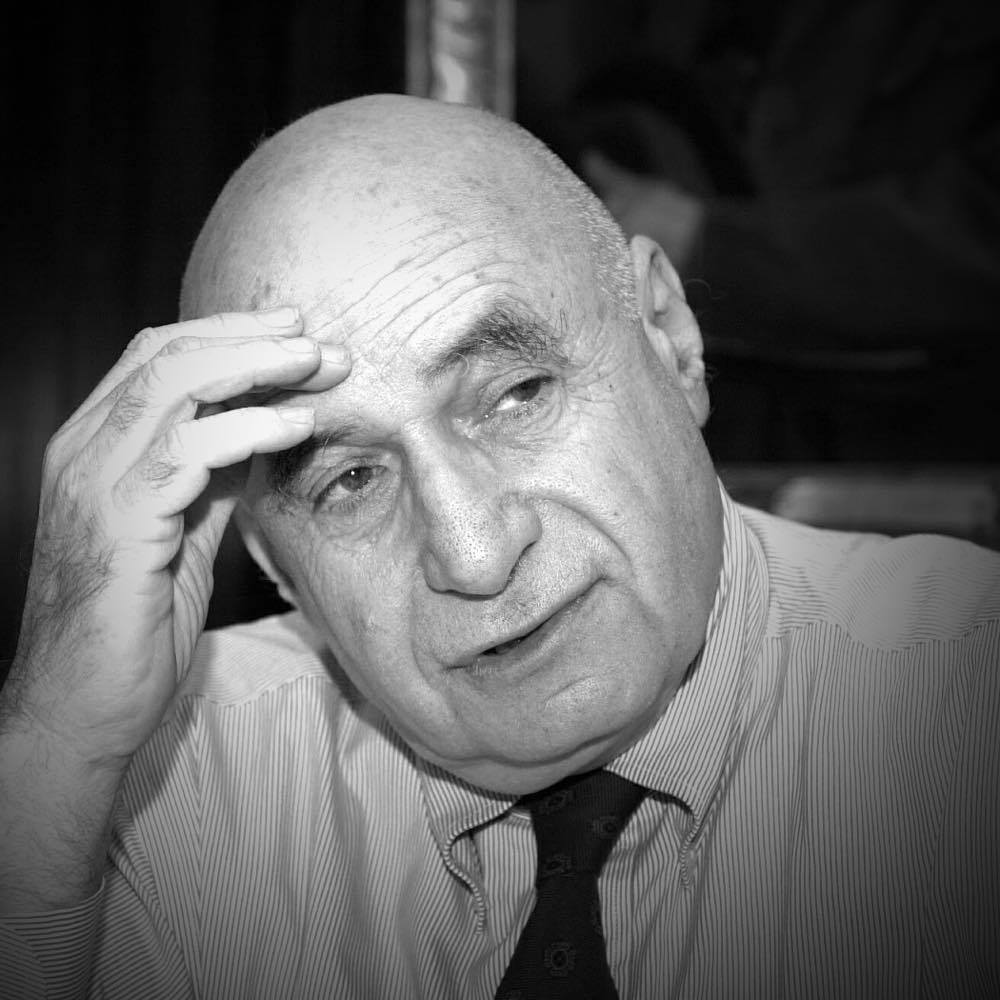



 In the mid-1980s, when David Martin began his pioneering studies of Pentecostalism, this phenomenon was the elephant in the living room of the scholarly study of religion: It was well on the way of becoming the fastest growing religious movement in history—from scattered groups in the early years of the twentieth century to what is now estimated to be a global community of around 600 million. But scholars tended to overlook Pentecostalism, possibly because they did not like it; as Martin pointed out, it was a revolution that was not supposed to happen. Things are different now. The elephant has become so big and so noisy that one cannot ignore it no matter that one may want to wish it away.
[I don’t want to burden this post with a terminological discussion. The phenomenon is indeed huge and thus inevitably variegated. Distinctions have been made between “classical Pentecostalism”, “neo-Pentecostalism”, “Pentecostalization”, “charismatic Christianity”, “renewalism”. Whatever the merits of these concepts, there is an underlying reality that pertains to all these groupings, best described as a version of Evangelical Protestantism with distinctive adds-on—notably a pervasive sense of the supernatural, miraculous healing and other “gifts of the spirit”, and ecstatic worship marked by “speaking in tongues”. For the present purpose I will simply refer to “Pentecostals” and “Pentecostalism”. ]
In the last few days I have been reading two relevant items. In the May 2012 issue of Christianity Today (the banner Evangelical publication, by no means identified with Pentecostalism) there is a story by Tim Stafford about a Pentecostal ministry in Mozambique. The story is accompanied by a number of dramatic photographs. The key person is Heidi Baker, with her husband Rolland playing a supportive role. Heidi travels all over the world for months at a time, though the couple has established their center in Pemba, a desolate place in rural Mozambique. The ministry consists of highly charismatic preaching, establishing new congregations led by African pastors trained by the Bakers, refuges for orphaned children and other abandoned people. But at the heart of the ministry is miraculous healing, which is Heidi’s special gift. The story in Christianity Today contains a vivid account of a healing service specially concentrated on deaf people, all of whom were supposedly healed there and then. Numerous other illnesses are claimed to have been healed by Heidi, and “scores” of individuals were reported as having been raised from the dead.
The Bakers are Americans. Rolland grew up in Taiwan, a child of Pentecostal missionaries. Heidi was converted to Pentecostalism as a teenager in California. When newly married the couple spent a decade in Asia, beginning in Indonesia, engaged in “music and drama evangelism”. They subsequently were influenced by the so-called “Toronto Blessing”, a charismatic form of worship characterized by uncontrolled laughter. They moved to Mozambique because they were told that it was one of the poorest countries in Africa. Their organization there is called the Iris Ministry; supposedly it has 90 affiliated churches—a sort of denomination all by itself. None of the pastors receive salaries; they start preaching in a place and gain converts, who then support them. In Pemba the Bakers run the Harvest School, where for six months every year some 300 students from North America and Europe, with an equal number of African students, are prepared to do missionary work for the Iris Ministry. The living conditions at this establishment are described in a way unlikely to appeal to American undergraduates shopping around for a good place to spend a junior year abroad: “Everyone lives six to a room in stifling conditions without air conditioning. They eat Mozambican beans and rice nearly every day, they sometimes do without water for washing, and once a week they travel to villages to sleep in tents and do outreach.” The living quarters of the Bakers seem only slightly less spartan. The Pemba complex also contains a school for 2,500 students, an orphanage and a home for deserted women.
I have no doubts about the accuracy of what Tim Stafford reported as having seen in Mozambique. Nor would I doubt that the Bakers are sincere in the claims they make. There is no way I (or, for that matter, Stafford) can assess the claims about the successful outreach of the Iris Ministry. Given the centrality of miraculous healing in the Bakers’ missionary enterprise, one would particularly like to know whether the alleged cures (not to mention the alleged resurrections of the dead) were clinically real, rather than temporary remissions or illusions produced by mass hysteria. I for one have an open mind, but am frankly skeptical. I am told by well-informed people that respected medical schools have become more open to alternative therapies based on this or that version of “spirituality”. Be this as it may, I am impressed by the negative outcome of one rigorous clinical study—especially given the fact of who funded it. The Templeton Foundation, a major supporter of religion studies, funded a “Study of the Therapeutic Effects of Intercessory Prayer”. The prayer was “remote”—that is, people prayed for did not know about this, thus controlling for a possible psychosomatic effect. The final report of the study, issued in 2006, concluded that prayer was not effective in reducing complications following heart surgery in this group of patients. Templeton deserves credit for making this finding public—especially since it probably did not like the negative result of the study (the Templeton Foundation is known for its favorable attitude to every form of “spirituality”).
Every beginning sociology student learns the co-called “Thomas’ dictum”—the statement by W.I. Thomas, a classical American sociologist, who wrote (curiously, in a footnote in his massive book about Polish immigration to Chicago): “If people define a situation as real, it is real in its consequences”. No matter what clinical studies might show, Tim Stafford witnessed that the deaf boy targeted by Heidi Baker’s charismatic ministration believed that he had been healed, as did the crowd present at the event—and as do many thousands of Pentecostals in similar events all over the world. That belief is a core element of the Pentecostal experience. It goes a long way in explaining what makes Pentecostalism attractive and (in David Martin’s term) “transportable” to many different cultural contexts.
I have also been reading the current issue of Pneuma: The Journal of the Society for Pentecostal Studies. The sponsoring society has been in existence since 1970, the periodical since 1979. I have not seen any of its earlier issues. It is now published three times a year by Brill, the Dutch academic house known for the outrageous prices of its publications—the electronic version of Pneuma costs $286 per annum, the print version $343. (Not many African Pentecostals are likely to be subscribers.) The editors are Amos Yong and Dale Coulter, both at Regent University in Virginia Beach, Virginia—the institution founded in 1978 by Pat Robertson, onetime Evangelical icon and activist. The journal describes itself as “peer-reviewed”, though the “peers” seem to be largely affiliated with Regent. All the same, the journal is definitely not an advocacy instrument. Both the content and the appearance are conventionally academic. Each article is buttressed by veritable mountains of footnotes. I have not read everything in the issue, but nothing I have read is Pentecostal propaganda and what I have read could have been written by authors of any or no faith—secular academia at its most orthodox. I found two articles especially interesting: one dealing with Pentecostalism in Australia in the 1880s, apparently part of a trend that pushes the origins of the modern movement back well before the famous Azusa Street Revival of 1906, the other comparing the movement with the “Proto-Pentecostalism” of the 13th-century Franciscans. The footnotes testify to the fact that Pentecostal studies have become a flourishing cottage industry.
I think that even today the notion of Pentecostal scholarship, especially if undertaken by scholars who are themselves Pentecostals, must strike many people as an oxymoron. Evangelicals in general are still widely regarded as backwoods provincials, like those described with contempt by H.L. Mencken in his reports on the 1925 “monkey trial” in Dayton, Tennessee—or, in the profoundly revealing 2008 comment by Barrack Obama about folk in small towns (revealing, that is, about him, not about the people he was talking about): “They get bitter, they cling to guns or religion or antipathy to people who aren’t like them.” These stereotypes were never empirically correct, and now are grossly incorrect. What has been happening in recent decades is the emergence of an increasingly sophisticated Evangelical intelligentsia, some of it based in a network of Evangelical academic institutions, publishing houses and journals, some (more interesting) infiltrating secular elite academia. Pentecostals are still lagging behind other Evangelicals in this development, but they have started to move in the same direction in America and elsewhere. Amos Yong, the senior editor of Pneuma and a leading Pentecostal theologian, was born in Malaysia of ethnic Chinese parents and came to America as a child. A large Protestant, mainly Pentecostal university has been founded in Guatemala (the country with the highest percentage of Pentecostals in Latin America). The Rhema Church, a huge Pentecostal congregation in a suburb of Johannesburg, is favored by the new black political elite (among other things, for what resembles state funerals).
The two items mentioned above indicate the trajectory in which an increasing number of Pentecostals are likely to move. The Mozambique story still represents much of Pentecostalism in Africa, Latin America and Asia. But precisely because of the “Protestant ethic” preached to and frequently practiced by Pentecostals, and the social mobility it engenders, there has now emerged a Pentecostal middle class in some places. The wondrously named Universal Church of the Kingdom of God in Brazil (which incidentally sends missionaries to Portuguese-speaking African countries) caters to this class. There are some places where people who are already middle-class have converted to Pentecostalism, remarkably in China (so-called “boss Christians”). With social mobility, there appears a middle class with higher education and bourgeois lifestyles. Inevitably the character of religious groups changes in the course of this development, generally in the direction of a less robust supernaturalism and a more sedate piety. This is what has happened to the major Pentecostal churches in the United States, and is very likely to happen elsewhere. Sociologists of religion should not be surprised. Max Weber has conceptualized this process as the “routinization of charisma”. This change, however, does not necessarily mean that the core of the original faith is lost. Religious traditions have always shown an amazing capacity to adapt to social change. Pentecostalism, with its undogmatic spontaneity and trans-cultural “transportability”, probably has this capacity to an unusual degree.